Today I'm featuring an interview with author A.J. Brown. I had the good fortune to meet A.J. several years ago in an online writer's group, and we've kept in touch off and on during the years. You can even find a couple of anthologies here and there in which both of us have work (just this month, Blood Bound Books released
Night Terrors 2, an anthology in which work from both of us appears). Truthfully, it's hard to find an anthology or publication that A.J. doesn't have something in. I don't know that I've ever seen a writer so prolific -- over the past two years A.J. has written a combined 112 short stories, a figure which puts most writers to shame. Over the four years immediately prior to that, he wrote an astounding 512 -- with a high of 135 stories in 2008. Most recently he's had his story, "In the Shadows They Hide," published in the aforementioned
Night Terrors 2 anthology. And earlier this month, Dark Continents Publishing released a collection featuring three of his stories entitled
Along the Splintered Path. The collection's release was part of Dark Continents' project
Tales of Darkness and Dismay, featuring a series of novellas and collections from a dozen different writers.
If you want to know a little bit about the nuts and bolts of how A.J. and Dark Continents put the collection together, writer Michelle Garren Flye covers that in an excellent interview with A.J. at
BREATHE.
Now, A.J., let's get started.
John: Tell us briefly about the Along the Splintered Path -- how did you whittle your work down to the stories you chose, how they were chosen, what were you looking for when Dark Continents commissioned you to do the collection?
A.J. Brown: I didn’t have a lot of time to put this together. Thankfully, throughout 2011 I had put together a couple of larger collections in hopes of having one of them picked up. I received a few nibbles and even had a few promising leads, but they all fell through. So, when DCP contacted me about putting something together—a novella or three or four short stories for a collection—I jumped on it.
I did a ton of editing on around twenty stories last year so I perused those and chose six pieces. I then enlisted help from a few friends and got it down to the four pieces I ultimate sent off. DCP chose the three they liked and Along the Splintered Path was born.
As far as what I was looking for: I’m a writer and I want to be published, I want readers to be able to see my work, to enjoy the words I put down. That’s the goal—to reach readers.
John: I'm particularly interested in The Woodshed. I read that story several years ago in its first public incarnation in the Dark Distortions anthology. You said in
Michelle Garren Flye's interview that you rewrote much of the story since then. Is that a difficult process? How do you set aside what's already there, how the story already came to life once, and put together a separate piece that maintains the essence of the original? Isn't that, in many ways, more difficult than the original writing?
A.J. Brown: When I decided to rewrite The Woodshed I knew it would be a challenge. It had garnered some good comments and a lot of people really liked it. As a writer yourself, you know that things you wrote five years ago may not be as well written as things you would write today. When I went back to the Dark Distortions version, I saw a few things that could use tweaking and a lot of that had to do with the way Kyle came across. He had to be a sympathetic character and his voice had to ring true throughout the entire piece. There were parts in there that I felt Kyle lost his voice. There were also a couple of contradictions that I can’t believe I didn’t catch back then.
The thing with rewriting a story from beginning to end is you can’t be enamored with a line or paragraph or even entire pages. You have to be willing to say this has got to go and this needs to be reworded and, oh boy, how did I miss this? Your mindset is completely different and the work is more tedious—it is harder than sitting at the computer and typing something all new.
To best explain the process, it’s kind of like working on a car or fixing the roof of your house. You see what needs to be done, you figure out what things need to be taken off or dismantled, then you repair it by putting in new parts or making the old parts sturdier. It’s time consuming and sometimes—okay, a lot of times—you mash your thumb or mess something up and have to go back and do it again, but in the end, you have things the way you want them. Your car is running again and your roof is fixed. Can you tell I’m from the south?
John: We haven't kept in touch too much over the past year or two, but I recall from earlier times you were really wrapped up with short story writing, with no inclination toward longer works. Any ideas of tackling a novel now, or have you already done that?
A.J. Brown: Ha! Yeah, I still have no real interest in tackling a novel. However, I have written two in the past couple of years. I know, a contradiction of sorts. I didn’t set out to write a novel or really anything over five or six thousand words. I never do. I have a process for when I write: I sit down with a thought or a story swirling in my head and I just start typing. Most of the time the hardest part is coming up with the right opening line. I write. If a story ends up being two thousand words, then fine. If one ends up being sixty-seven thousand, then I’m fine with that also. I chose a long time ago not to limit my stories based on a word count. I found writing to a word maximum was restricting for both the stories, and me so I stopped doing that. The two novels I wrote were done so by just sitting and writing and letting them take me on a journey.
John: Along the Splintered Path is an e-book collection, available for download to the Kindle. In this age in which it seems nearly every writer is abandoning traditional publishing for self-pub e-books, why did you choose to work with a publisher, rather than go it alone with self-publishing the work?
A.J. Brown: I was lucky. Simple as that.
I actually did do a little e-publishing at the beginning of last year. Three stories were posted in a four month period over on Smashwords. They got some good reviews and I think I even got a fan or two out of it—which made the effort well worth it. But, ultimately, I’ve always wanted a publisher to think that my work was worth putting out there.
I must have queried fifteen different places in 2011 about putting together a collection. It may have been more. I’m not sure. But, the no’s outweighed the nibbles and I strongly considered calling it a writing career and being done with it.
Earlier in the year I subbed to DCP and they were very polite in their rejection and, honestly, I marked them off my list for 2011 and thought I would try again in 2012. Then at the tail end of November I received an e-mail to consider submitting for the e-book launch, Tales of Darkness and Dismay. Of course, I submitted and I’m happy I did so.
You never know when a door you thought was closed may reopen. As I said, I was lucky.
John: Tell me, how in the world do you write at such a prolific pace? Before you answer, let me tell our readers those short story figures I mentioned in the introduction are for fully completed stories. They don't count the unfinished pieces, nor do they count the poetry, blogs, and other writing you do.
A.J. Brown: It was something that developed in 2005 when I joined the workshop you mentioned earlier. In that workshop are various private offices and there was one called, I can’t quite remember the name, but something like ‘Nellie’s Flash Office.’ It was an office where you were given a topic on one day, you had one hour to write the story in under a thousand words and post it up for the other contestants to read and then 24 hours to read and review the stories and vote for your top three.
This was more of a literary type office, but I learned a lot about the economy of words and how restricting they can be. But I also learned how to take a simple idea and turn it into a story in an hour’s time. Now, understand what I’m saying: View the topic, come up with a story, write the story, edit the story to some degree and post it in sixty minutes. That’s when you realize how short an hour can be.
Later on I joined another flash contest office before creating my own dedicated to horror stories only.
After I stopped writing flash stories (they are just too restrictive for a long winded person like me) I still implemented something I learned in that original office. Instead of writing in increments of a thousand words I began writing in increments of five hundred. By writing five hundred words, walking away for a few minutes or an hour or whatever, then coming back and writing five hundred words again, that word count became a breeze and I could write six, seven, ten thousand words in a day (when I had that type of time) easily. For me, I actually have a notepad by my desk so when I write I note the current word count and the time and then write until I reach the five hundred word mark, then stop (unless I’m on a roll and then I keep going). I make note of the new word count and time then do it again. It’s almost like I’m holding myself accountable to five hundred words every single time I sit to write. Not four hundred ninety-nine. It’s always five hundred or more. Always.
John: There are not enough markets to publish all of your works, I don't believe. What are your plans for all those stories that have not yet seen publication?
A.J. Brown: I’m going to rewrite them. I started that process last year and have turned some bare bones stories into meaty pieces by concentrating on what’s good about each piece and improving on them. I’ll never get them all published and I don’t think I’ll try to. But, there are easily a couple to three hundred good pieces that can be fleshed out a little more and that can come alive with a little more work.
John: Let's stray away from writing for a bit for a round of quick questions to give readers a little insight into you. What would be your dream job?
A.J. Brown: Coaching. I love coaching kids.
John: Dream car?
A.J. Brown: 1972 Mustang
John: Dream location to live?
A.J. Brown: Wow. I really don’t know. I would love to live in Ann Arbor, Michigan so I could go see the Wolverines play, but my wife says no way to that.
John: Favorite non-writing-related activity?
A.J. Brown: LEGOs. No joke. I love LEGOs.
John: Who is your favorite big-name author?
A.J. Brown: Stephen King
John: Favorite not-quite-so-big-name author?
A.J. Brown: I absolutely love
John Mantooth's work. So elegantly written. His stories are just phenomenal works of art.
John: Favorite television show?
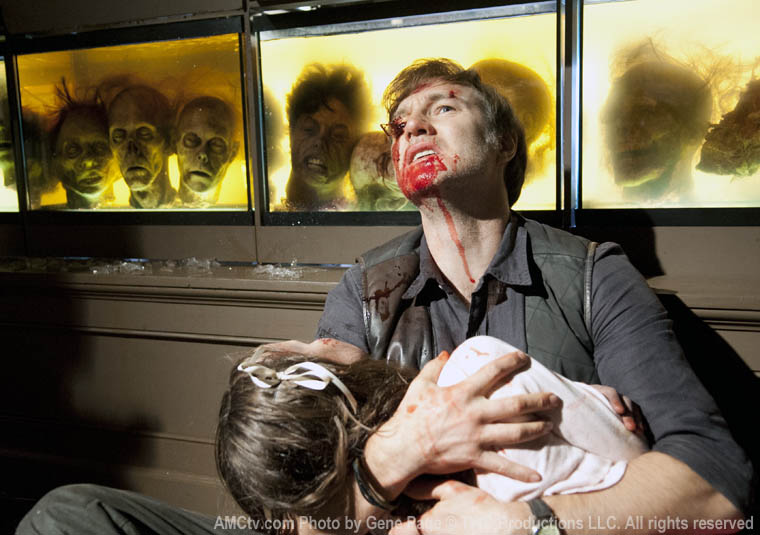
A.J. Brown: The Walking Dead
John: Favorite movie?
A.J. Brown: The Outlaw Josie Wells
John: Okay, back to the writing. What's the best part of the writing process for you?
A.J. Brown: Watching my characters come alive and seeing how the stories unfold. I rarely have a clue where my stories are going or how they’ll get there. I have an idea and I just go with it. Learning about the stories and sitting in the passenger’s seat while they unfold is awesome.
John: Is there anything in the process you particularly dislike?
A.J. Brown: Getting stuck. Sometimes I write myself into a corner and have to go back and figure out where that happened. I hate it when that happens.
John: What do you do to get away from it all -- when work is hard, writing doesn't fill the bill -- how do you recharge your batteries?
A.J. Brown: My mind never really leaves writing. It’s always there, intentional or not. Anything can be a story idea—anything at all—and that is both the exciting part of being a writer and the bane of existence as well.
Music, I think, is the one thing that takes my mind away—at least temporarily. It gets the juices flowing again and helps with the writing process.
John: Plans for the rest of 2012? Where can we find your work? What big projects are on the horizon?
A.J. Brown: Keep writing and promoting for
Along the Splintered Path as well as for the other books in the
Tales of Darkness and Dismay release. I hope the collection is a springboard of sorts and that someone reading it would consider my work for something else further on down the line. I do have those two novels—one of which I’m pretty sure readers will like.
Places you can find me are:
My blog,
Type AJ Negative
Facebook:
AJ Brown
I have a Twitter account, but I hate Twitter. However, I do use it. You know how it is with all those necessary evils.
Twitter: @AJBrown36
John: Thanks so much for taking the time to answer my questions. A.J. I'm looking forward to reading the new version of The Woodshed, the rest of the stories in
Along the Splintered Path and to seeing what else you have coming down the road this year.
A.J. Brown: Thank you, John, for having me.
John: My pleasure, A.J. For any of you wanting to keep up with A.J. and his work, visit his website at
Type AJ Negative